
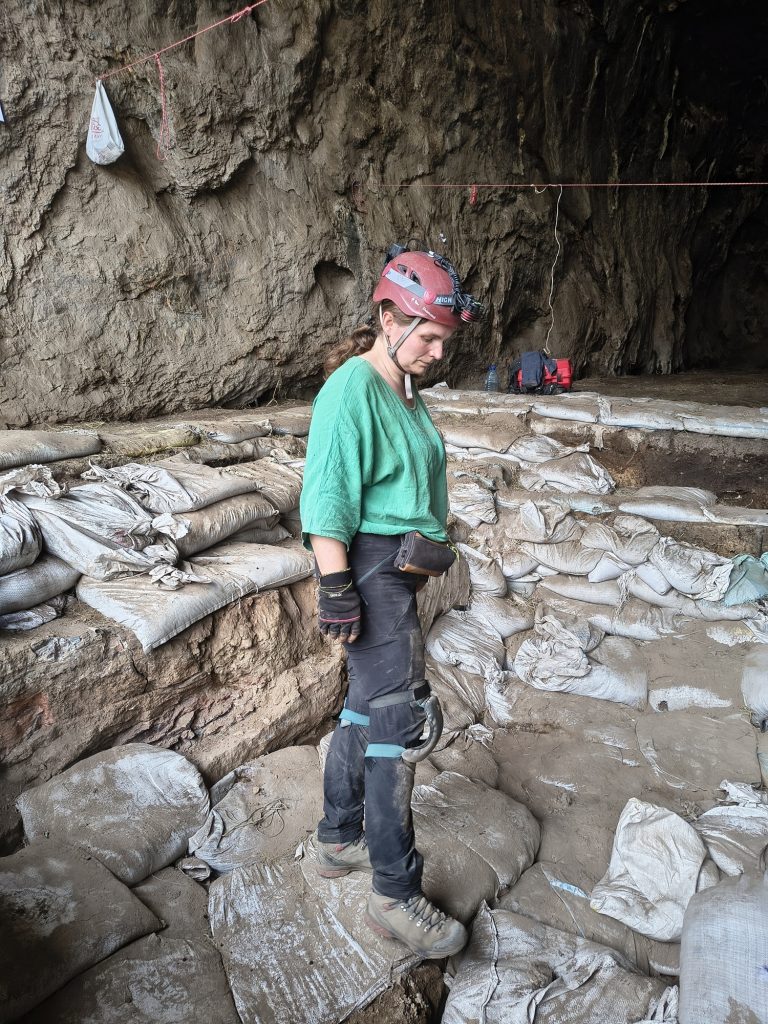

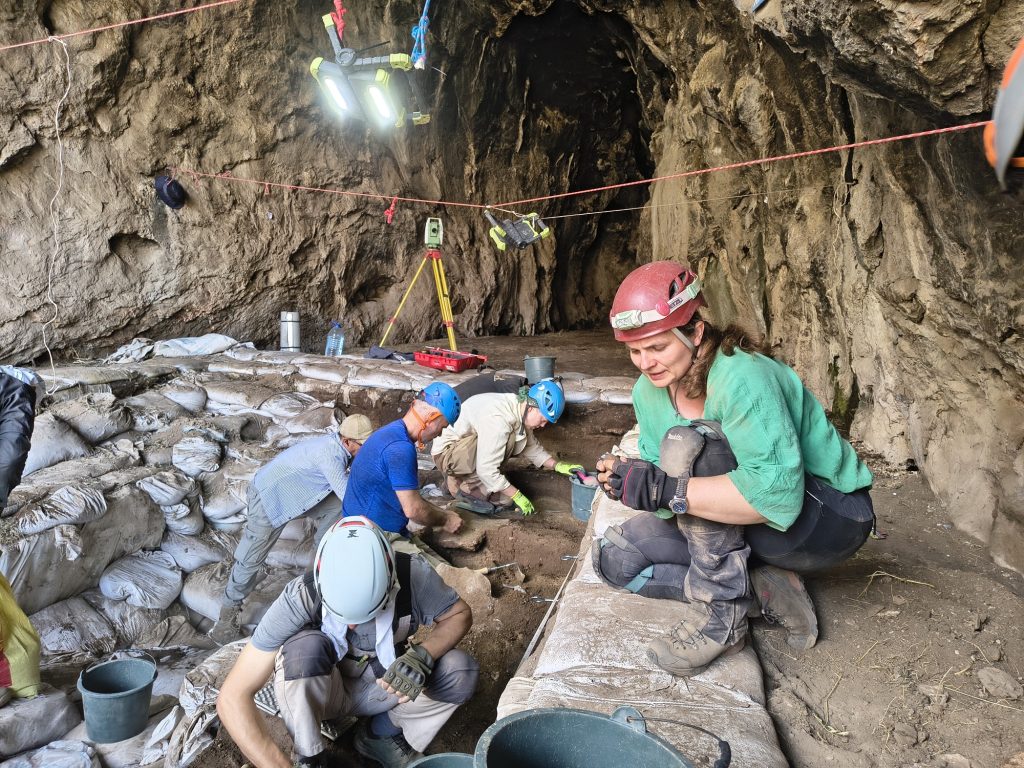
This project is a real challenge. After all, how do we search for caves that are not on any maps? How do we reach them through mountains where there are no trails or paths? We are off for five years of a great adventure.
an excerpt from an interview with Prof. Małgorzata Kot – ERC Consolidator Grant (2024)
Małgorzata Kot is a Palaeolithic archaeologist specialising in human evolution, stone tool technologies and cave archaeology. Her research focuses on changes in stone tool production and what they can tell us about the behaviour of past human populations, as well as the different ways caves were used in prehistory.
Her fieldwork has taken her to Poland, Uzbekistan, Georgia, Montenegro and Tunisia. Much of her research combines the study of Palaeolithic stone tools with cave archaeology, using both to explore how past human groups lived, adapted and developed new technological traditions.
As Principal Investigator of INASIA, Małgorzata leads an international and interdisciplinary team investigating the Initial Upper Palaeolithic in West Central Asia. At the heart of the project is a fundamental question: who made the earliest blade technologies found in this region? Through research in the mountain caves of Uzbekistan, INASIA explores whether these technologies were brought by early modern humans or developed by other hominin populations.
Background and research
Małgorzata received her PhD in archaeology from the University of Warsaw in 2013. Her dissertation, The Earliest Middle Palaeolithic Bifacial Leafpoints in Central and Southern Europe. Technological Approach, examined some of the earliest bifacial leaf point technologies of the Middle Palaeolithic from a technological perspective.
Her research has since developed around Palaeolithic technology, human evolution and cave archaeology, combining detailed studies of stone artefacts with archaeological fieldwork across different regions.
In 2024, Małgorzata was awarded an ERC Consolidator Grant for INASIA – Were They Modern Humans? The Problem of the Initial Upper Palaeolithic in West Central Asia. The project builds on her long-standing interest in technological change and human behaviour, extending these questions to the complex history of human populations in Central Asia.
Link to Google Scholar