
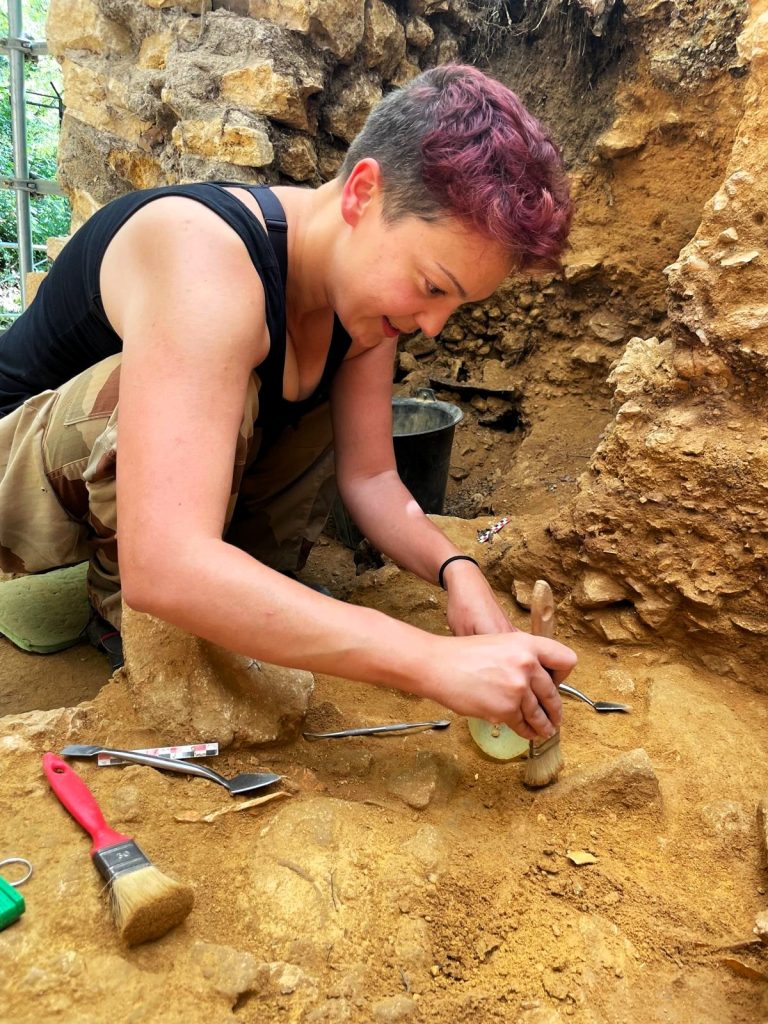
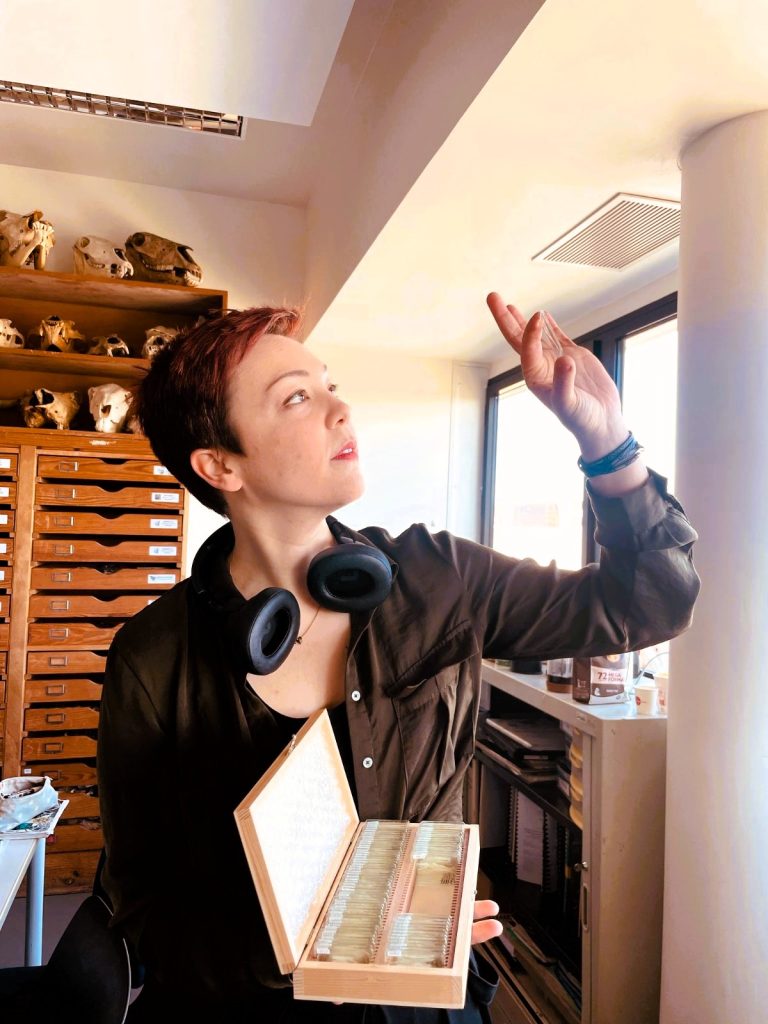
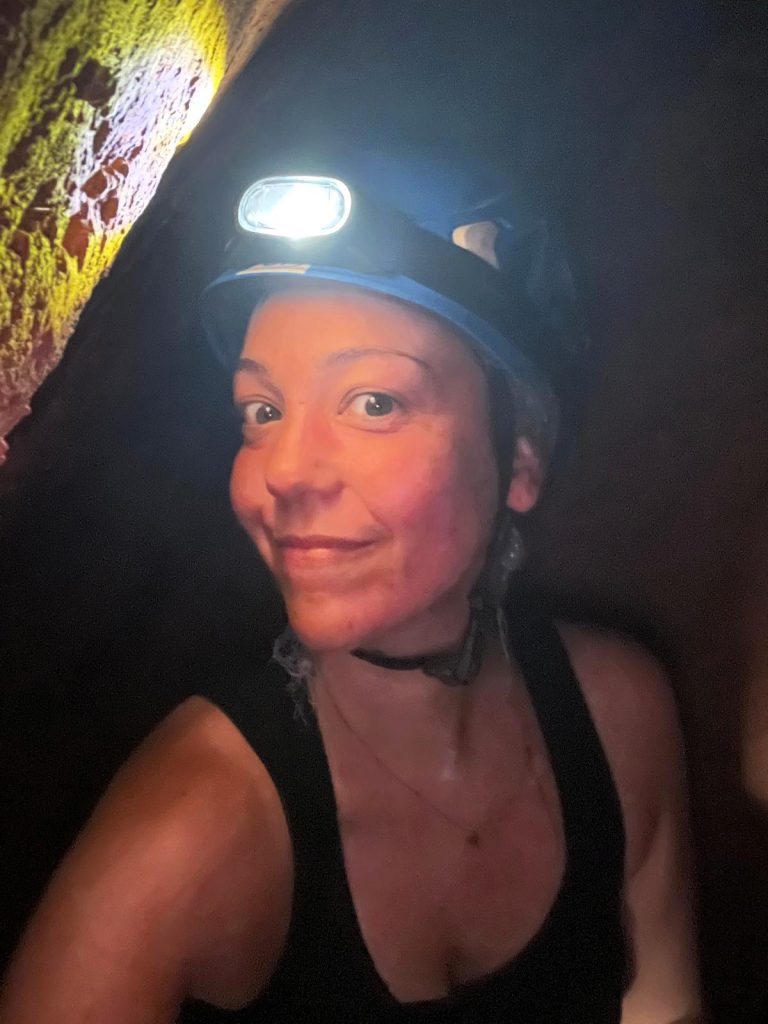
Alessandra Livraghi is a zooarchaeologist who brings to INASIA a unique way of reading the Palaeolithic past through animal remains. She connects the study of bones,
teeth and archaeological contexts with broader questions about environment, seasonality and human behaviour.
In the project, Alessandra looks at faunal remains as more than evidence of which animals lived around the site. Through zooarchaeology, taphonomy, cementochronology dental wear analysis and palaeoenvironmental reconstruction, she investigates what animal bones and teeth can reveal about when caves were occupied, how long people stayed there, and how human activity was linked to seasonal and ecological conditions. Her work gives INASIA a crucial perspective on the rhythm of Palaeolithic life. By tracing information preserved in animal remains, Alessandra helps reconstruct how people moved through mountain landscapes, how they interacted with animal communities, and how changing environments shaped the use of cave sites.
Background & Research
Alessandra holds an International Doctorate in Quaternary and Prehistory from Universitat Rovira i Virgili and the University of Ferrara. Her doctoral research focused
on Neanderthal subsistence strategies in north-eastern Italy, using dental wear analyses and cementochronology to investigate the seasonality of occupations at De Nadale, San Bernardino and Fumane caves.
Before joining INASIA, Alessandra held a Fyssen Foundation Post-Doctoral Fellowship at CNRS UMR 5608 TRACES in Toulouse, where her project focused on the
seasonality and extent of Neanderthal occupations at Combe-Grenal and Chez Pinaud- Jonzac in France. She also worked at the University of Ferrara on zooarchaeological analyses of faunal assemblages from De Nadale Cave and Fumane Cave, including taxonomic and anatomical identification, taphonomic analysis, zooarchaeological quantification, cataloguing and database management.
Since 2021, Alessandra has also served as field director at De Nadale Cave and Rio Secco Cave in Italy, coordinating excavation activities, student and researcher teams,
and administrative procedures connected with fieldwork. Her experience combines laboratory-based faunal analysis, high-resolution seasonality studies and practical field
leadership.
Link to ResearchGate