
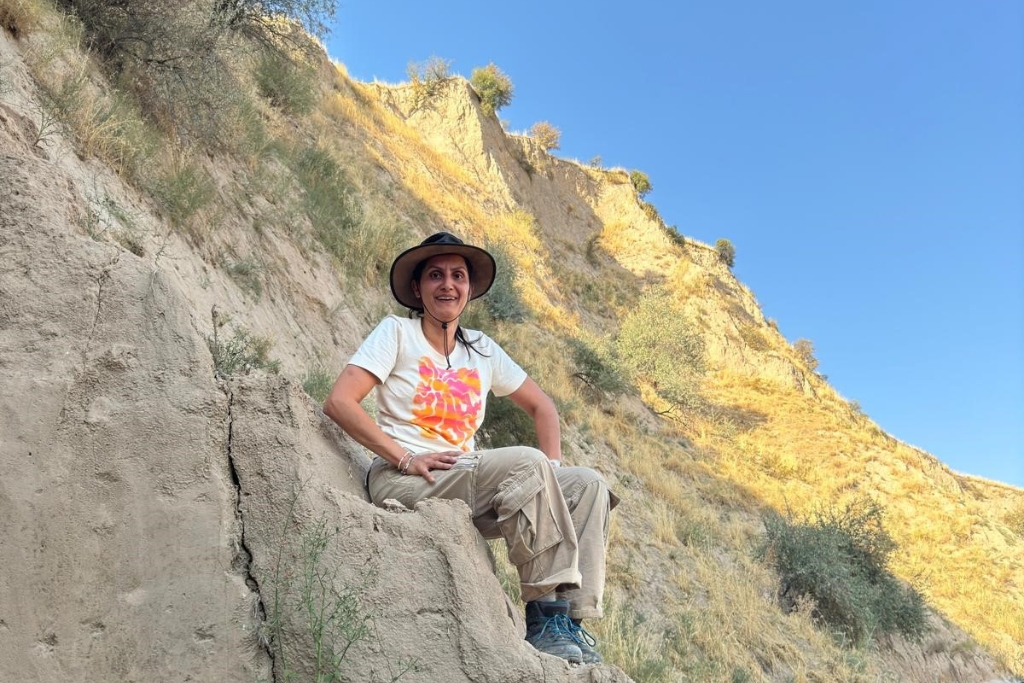
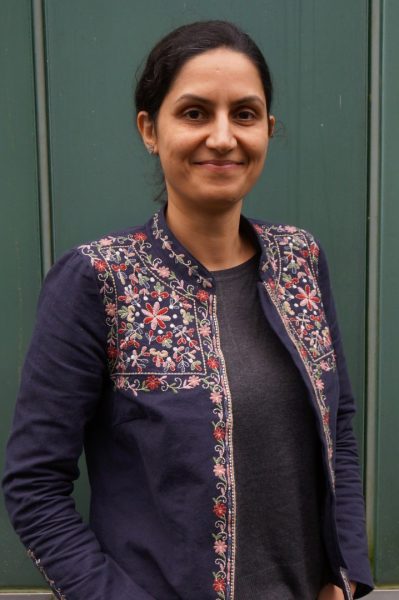

Across the Iranian Plateau, the Caucasus and Central Asia, Elham Ghasidian follows the traces of Palaeolithic populations through stone artefacts and the landscapes in which they were made, used and discarded. Her work brings to INASIA a long-term regional perspective on hominin dispersals, cultural transmission and technological adaptation in areas that are still underrepresented in wider debates on human evolution.
Within INASIA, Elham contributes her expertise in lithic technology, chaîne opératoire and comparative analysis of Palaeolithic assemblages. She will take part in surveys and excavations at high-mountain cave sites, document stone artefacts through drawing and photography, and conduct morphometric, technological and refitting analyses of materials from the studied sites and selected regional comparisons.
Her research helps INASIA connect stone artefacts with larger questions about movement, innovation and interaction. By comparing lithic technologies across Iran, the Caucasus and Central Asia, Elham contributes to understanding how late Pleistocene hominins adapted to new ecological settings, transmitted technical knowledge and moved through key corridors between western Asia and Central Asia.
Education & Research
Elham holds a PhD in Early Prehistory and Quaternary Ecology from the University of Tübingen. Her doctoral dissertation, supervised by Prof. Nicholas J. Conard, focused on the Early Upper Palaeolithic occupation of Ghar-e Boof Cave and the reconstruction of cultural traditions in the southern Zagros Mountains of Iran.
Alongside her work with INASIA, Elham is affiliated with the Neanderthal Museum in Mettmann and the Institute for Prehistoric Archaeology, University of Cologne. She previously held research positions at the Leverhulme Centre for Human Evolutionary Studies, University of Cambridge, the German Archaeological Institute in Berlin, the University of Tübingen, and the Iranian Cultural Heritage, Handicraft and Tourism Organisation in Kermanshah. Her research has focused on the Palaeolithic of the Iranian Plateau, the Caucasus and Central Asia, including the emergence of modern humans on the Iranian Plateau, Neanderthal dispersals through the southern Caspian corridor, and cultural connections between Iran and Central Asia. She has directed and participated in numerous surveys, excavations and laboratory studies in Iran, Tajikistan and the Caucasus, including work at Ghar-e Boof Cave, Sorheh Rockshelter, Liben Cave, Yawan Rockshelter, Azokh Cave and the Khudji Palaeolithic site in Tajikistan.
Link to ResearchGate